The Story
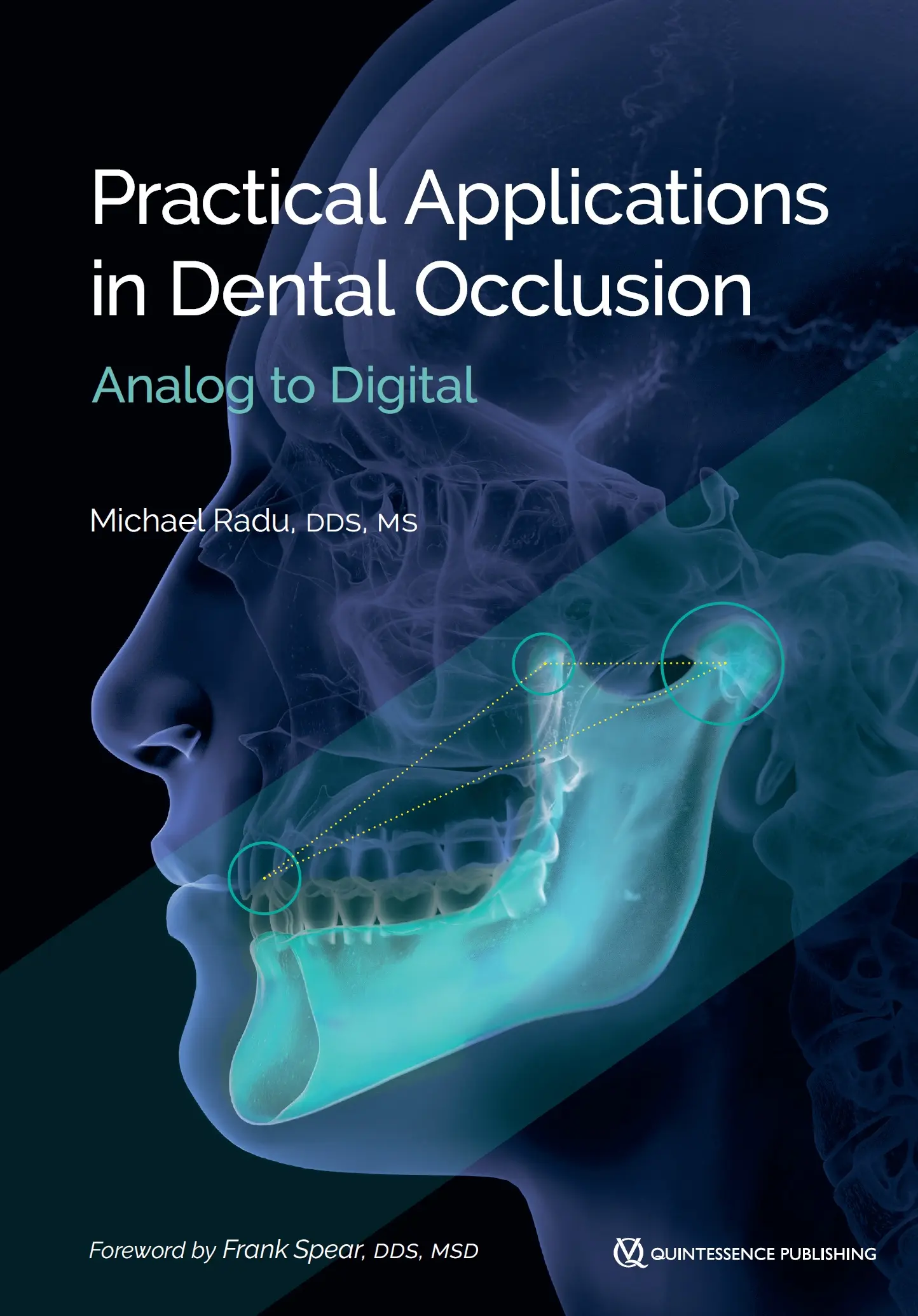
Occlusion is often boiled down to the “tap, tap, and grind” of articulating paper marks dentists perform daily. And for 90% of appointments, occlusion can be largely ignored until it’s time to get out the articulating paper at the end of the appointment. Tap, tap, and grind. Drill the red marks. However, sometimes the patient’s current bite won’t allow the necessary treatment, and a new occlusion must be built and transferred to the lab. But how? Should the patient determine the maxillomandibular position (ie, show where they feel comfortable), or should scientific principles be applied to find the physiologic maxillomandibular relationship? How do you capture the new occlusion for the lab? That’s where this book comes in—to teach you a simplified concept of occlusion that can help you perform predictable and successful treatment. The book is divided into two parts: Part 1 outlines guiding principles and a simplified model of occlusion, and Part 2 features specific situations you will come across as you diagnose, treatment plan, and treat your patients’ cases.
Author Michael Radu breaks everything down and offers explanatory analogies to help you conceptualize the principles of occlusion in a way you can understand and apply to daily practice for the benefit of your patients cases.
Contents
Chapter 01. Why Do We Need Occlusion?
Chapter 02. Practical Principles of Occlusion
Chapter 03. The Occlusion Formula
Chapter 04. There Are Only Two Bites
Chapter 05. Clinical Techniques and Principles of Interocclusal Registrations
Chapter 06. Techniques for Examination and Treatment Planning
Chapter 07. Techniques for Interocclusal Registration of an Existing Occlusion
Chapter 08. Techniques for Interocclusal Registration for a New Occlusion
Chapter 09. Techniques for Equilibration of the Occlusion
Chapter 10. Techniques for Recording the Envelope of Function
Chapter 11. Techniques for Communicating with the Laboratory
Chapter 12. Analog Versus Digital Techniques for Interocclusal Registration
Notes (providing context for the concepts described in the book)
Description
Occlusion is often boiled down to the “tap, tap, and grind” of articulating paper marks dentists perform daily. And for 90% of appointments, occlusion can be largely ignored until it’s time to get out the articulating paper at the end of the appointment. Tap, tap, and grind. Drill the red marks. However, sometimes the patient’s current bite won’t allow the necessary treatment, and a new occlusion must be built and transferred to the lab. But how? Should the patient determine the maxillomandibular position (ie, show where they feel comfortable), or should scientific principles be applied to find the physiologic maxillomandibular relationship? How do you capture the new occlusion for the lab? That’s where this book comes in—to teach you a simplified concept of occlusion that can help you perform predictable and successful treatment. The book is divided into two parts: Part 1 outlines guiding principles and a simplified model of occlusion, and Part 2 features specific situations you will come across as you diagnose, treatment plan, and treat your patients’ cases.
Author Michael Radu breaks everything down and offers explanatory analogies to help you conceptualize the principles of occlusion in a way you can understand and apply to daily practice for the benefit of your patients cases.
Contents
Chapter 01. Why Do We Need Occlusion?
Chapter 02. Practical Principles of Occlusion
Chapter 03. The Occlusion Formula
Chapter 04. There Are Only Two Bites
Chapter 05. Clinical Techniques and Principles of Interocclusal Registrations
Chapter 06. Techniques for Examination and Treatment Planning
Chapter 07. Techniques for Interocclusal Registration of an Existing Occlusion
Chapter 08. Techniques for Interocclusal Registration for a New Occlusion
Chapter 09. Techniques for Equilibration of the Occlusion
Chapter 10. Techniques for Recording the Envelope of Function
Chapter 11. Techniques for Communicating with the Laboratory
Chapter 12. Analog Versus Digital Techniques for Interocclusal Registration
Notes (providing context for the concepts described in the book)